
Things Need to Change
Do you see me?
We’re all human beings. So often people with learning disabilities are invisible in full sight. We must always speak with and to, not around or over or just to the carer — never referencing ‘he’ or ‘she’ who is standing right there in front of you.
We are all individuals. We all need human connection. We all have different support needs.
Do you have friends? Or do you just have acquaintances? Jen thought she had friends. Every person in our village knew her as she grew up because she had learning disabilities. Everyone had a kind word for her — but no one chose to go out of their way to get to know her.
Why don’t you see me?
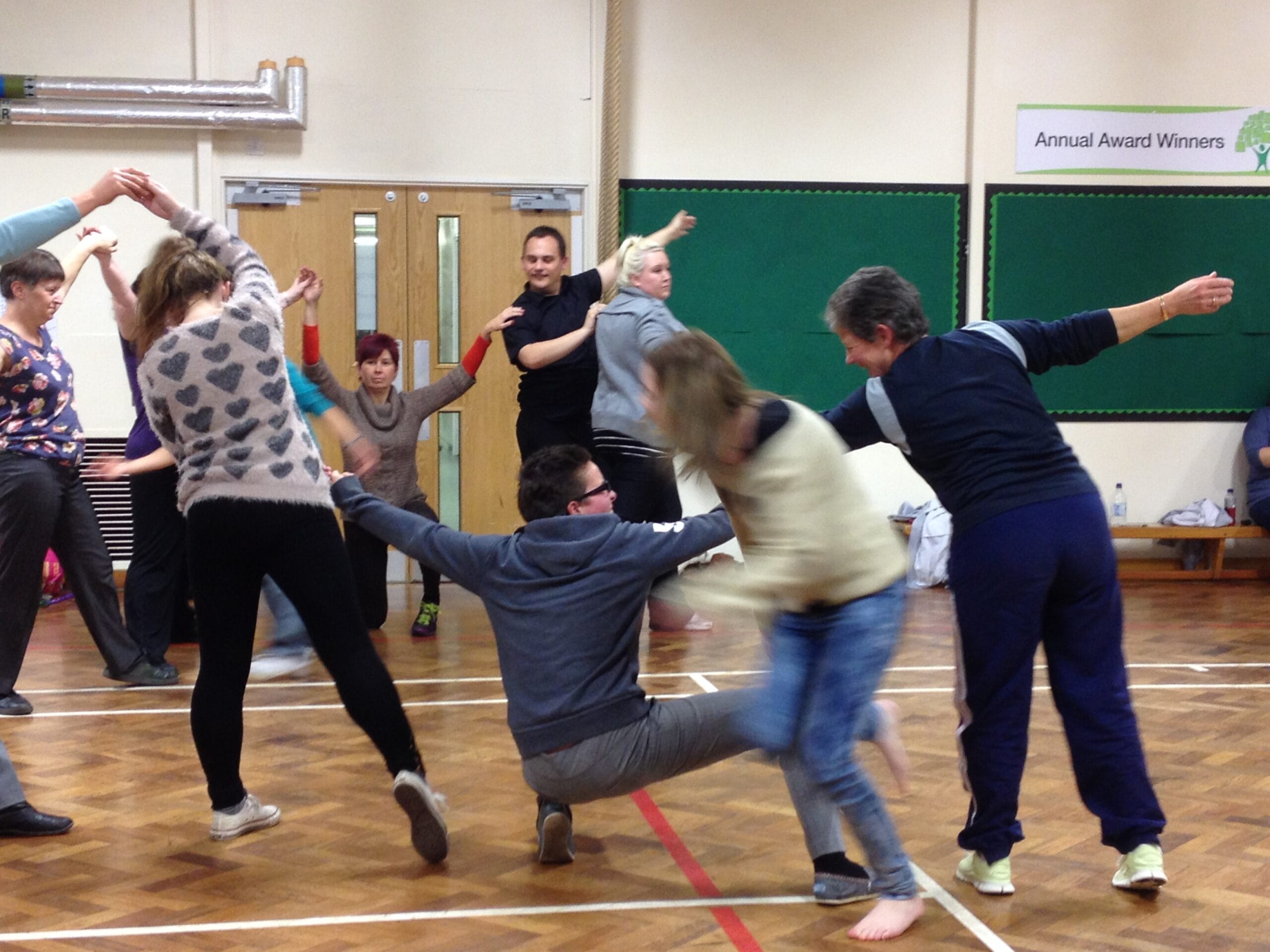
DanceSyndrome dancing together 2013
Many a person with learning disabilities is embraced by their community but doesn’t belong. This was Jen. So many acquaintances, but no real friends. No one who chose to take time to get to know her, to share a cup of coffee, to find out when her birthday was, to offer support.
Fast forward to Jen at 28, who took matters into her own hands and invited people into her space. 100 responses. 35 people came to meet her. 14 dancers proceeded into the future under the banner of DanceSyndrome. For the first time in her life she experienced the joy of meaningful friendship — people who value her for who she is, warts and all. Now her list of friends is enviable.
People with learning disabilities need you to cross the road and reach out to them.
Do you hear me?
I was in the middle of the Atlantic Ocean when the call connected. Jen’s voice came through the satellite phone, clear and familiar. Then a situation quickly developed on board. Around me on deck, conversation and activity pressed in that became clear we needed to think through together. I caught myself splitting my attention — half with Jen, half with those around me.
I stopped. I apologised to Jen, told her I needed to sign off, and promised to call back in 30 minutes. And I did. Because whether on land or sea, when you are speaking with someone — especially someone with a learning disability — they deserve your full presence.
This is something we all need to remember. Be in the moment. Not distracted by other conversations, by devices, by the TV. And whenever possible, treat each person equitably — speak directly to them, not to the person beside them.
Jen is almost 45. I relate to her as an adult — not autonomous, but an adult. She makes this easier than you might think: she understands that she has a learning disability and needs support, and she holds that knowledge with a kind of grace.
Jen can be her own worst enemy when she unwittingly leads people up the garden path, persuades a new carer to ‘treat’ her, chooses not to put in effort, or isn’t able to rationalise a challenge. Life is not always perfect, but we have learned to hear her voice, listen intelligently, and never to sweep behaviour out of character under the carpet — because it will fester and manifest in ways you couldn’t imagine. Reading between the lines is a honed superpower that her carers develop over time.
Why don’t you hear me?
Are you deaf to the needs of others? If you care, you can support people with learning disabilities. Every single person has a nugget of gold within them. If it’s obvious, there will be ways to support. If it’s not obvious, offer your help to the person and their support structure.
It’s up to you to take the action.
Do you value me?
People see Jen and the other Dance Leaders at DanceSyndrome as role models. They like what they see, so the dance leaders experience being in demand. This is heady for people all too often ignored or hidden in full sight.
But it’s strange how often organisations don’t recognise the financial costs that sit alongside learning disabilities. So many expect people like Jen to contribute without financial remuneration — and worse still, without even being prepared to meet their direct costs. How can an organiser expect to have that uniquely informed voice in the room if they won’t value it?
Creating a decision-making framework with Jen was one of the most important things we have ever done together. Before it, decisions about her life often happened around her rather than with her. Afterwards, we all knew exactly who in her life she needed support from for all aspects of daily life: her home, food and clothes shopping, personal care, or choices like attending events at the House of Lords, holidays, nails and hair. It gave her ownership. It gave her confidence. (She wisely chooses to distance herself from anything involving finance.)
Why don’t you value me?
You’re missing a trick. People with learning disabilities are some of the most innovative people in the world. You need them in your lives, in your businesses, in your sights.
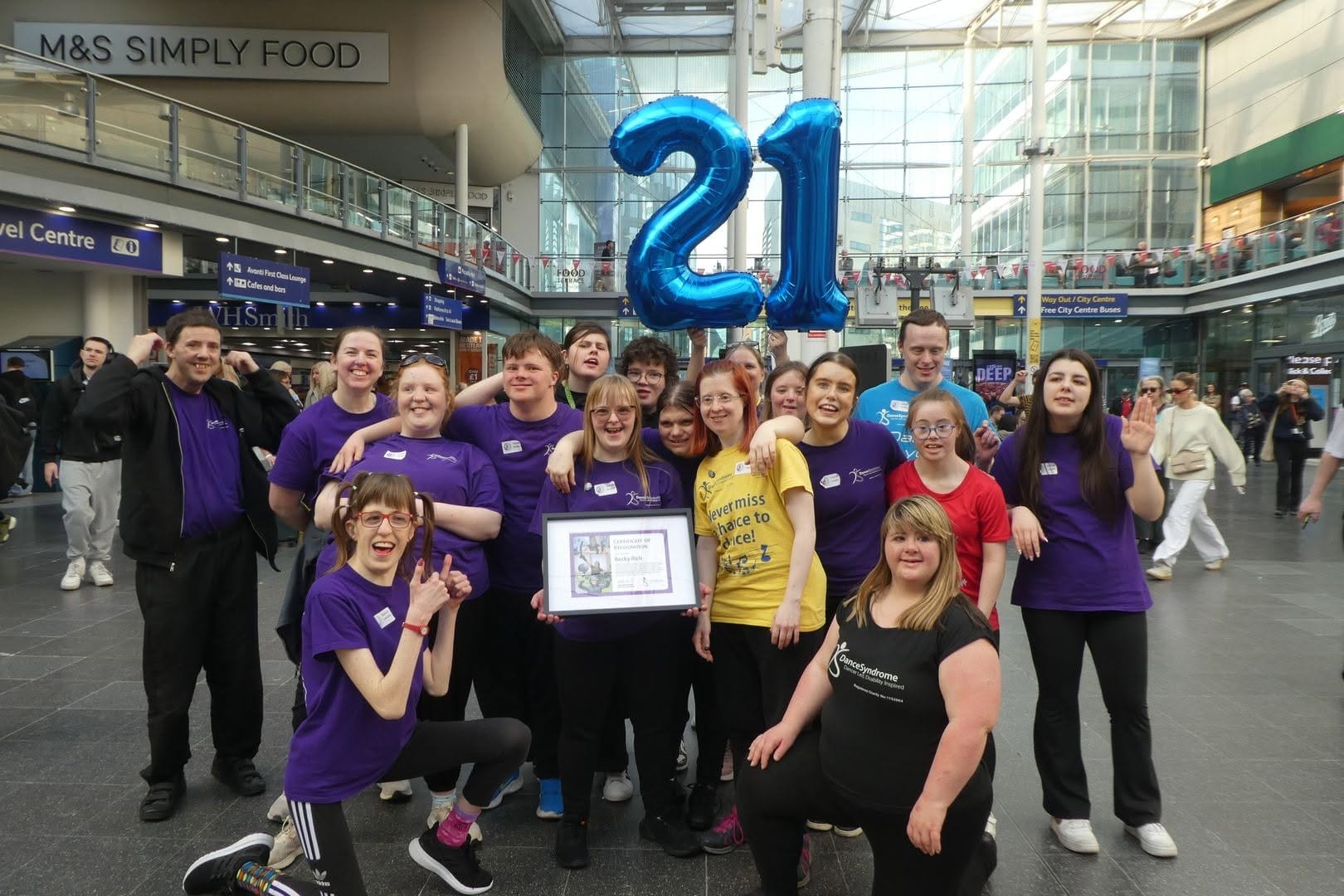
DanceSyndrome Manchester Piccadilly station takeover March 26. Becky with certificate
Take Peter. When co-delivering training to NHS inpatient senior ward managers who were lamenting the challenge of a patient in a wheelchair not being able to access the sensory room, he suggested taking a catering trolley — complete with sensory room equipment — directly to the person. This was received as revolutionary thinking. It is now benefitting patients across numerous wards, leaving them calmer and more fulfilled, and giving their families something they rarely see: their loved one at peace. A radical solution to a thorny problem, seen as blindingly obvious by someone with a learning disability.
Or Becky, who marched up to the ticket office at the train station and told them in no uncertain terms that they needed DanceSyndrome on their forecourt. One thing led to another, and now DanceSyndrome does regular train station takeovers — spreading smiles, joy and happiness to passengers and staff alike. What an incredible gift to possess.
There is so much for the rest of us to learn. But it will only happen when we are open to being led from unexpected places — when we choose to truly see, hear and value every person standing in front of us.
People with learning disabilities need you to cross the road. The question is whether you will.