
On 14 October I had the pleasure of introducing everyone at the Relight the Fire of Choice and Control event to DanceSyndrome. Opening the day gave us the chance to demonstrate what practising true inclusion and fighting for real choice and control can do.
The event was organised by NW ADASS, Think Local Act Personal (TLAP), Social Care Future, In Control and Community Catalysts. The room was full of people who rarely share the same space: people who draw on care and support, parents and family carers, voluntary and community organisations, local authority leaders, Social Work England, the NHS and many more. The Chief Social Worker for Adults, Sarah McClinton, gave a keynote address and was clearly taken by what the DanceSyndrome team had shared.
The focus was personalisation: direct payments, personal budgets and personal health budgets, and the freedom they are meant to give people to organise their care and support in the way that suits them. On paper, that freedom has existed for years. In practice, as many families know, it can be hard to reach. That gap between the promise and the reality is why days like this matter, and why I was so glad to be part of it.
DanceSyndrome ignites
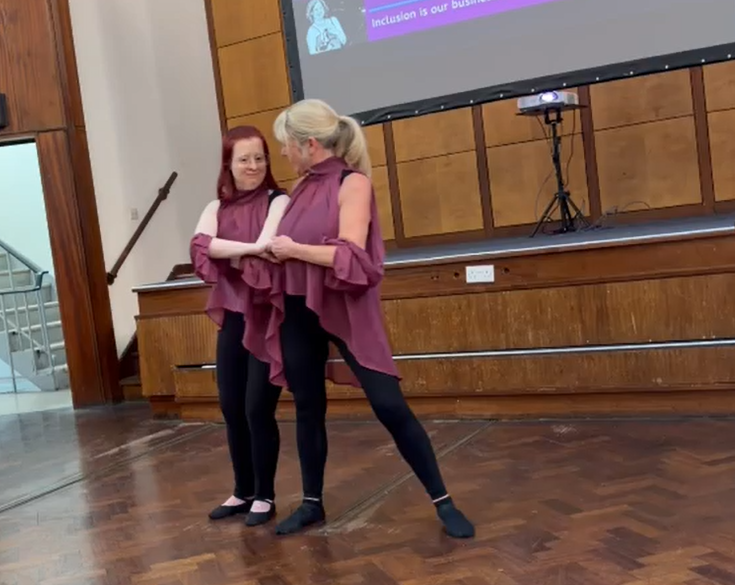 Everything DanceSyndrome does starts with people, not policy. My daughter Jen performed alongside her PA, Donna Wheeldon, who is also a DanceSyndrome Dance Leader. Julie Nicholson (Managing Director), David Corr (a Dance Leader with a learning disability), and his mum Jenni explained and showed how our model works and why being able to access DanceSyndrome’s Day of Dance in the community matters so much to families like the Corrs.
DanceSyndrome uses dance as a structured activity through which people are supported, showing what flexible, person-led support can look like in practice. The point was simple: when people are given real choice and control, and support is built around their passions, the results speak for themselves.
The response was humbling. Our contribution sparked many conversations during the day about how this way of working can make a real difference, and it was clear the benefits and impact had come through. Wirral’s Director of Adult Social Services, Sayyed Osman OBE, wrote afterwards that the DanceSyndrome model changes lives and brings happiness, choice, control and independence.
That recognition matters. It shows that what families like ours have been saying for years is being heard by the people who commission and shape services.
Firing up through conversation
Later in the day I joined the panel discussion. Drawing on our experience as a family, I spoke about what councils could do differently so that more people can live life to the full.
The breakout sessions that followed produced some great ideas and practical actions. What struck me most was the shared determination in the room. Nobody was defending the status quo. People from every part of the system wanted direct payments to work, and wanted them to deliver real choice and control rather than a different route into the same limited options.
What councils need to do so more people can live life to the full, like Jen
This is an overview of what I said throughout the day. None of it requires new legislation. It requires a change in how we think, listen and act.
- Listen to the person and their family
Don’t arrive with preconceived ideas of what can and can’t be done. Take the time needed to really understand the person: their passions and interests, what gets them up in the morning, and most importantly, how we help them develop a real purpose in life.
Being alive in the morning and again in the evening, with the time in between simply filled, is not good enough. Everyone deserves a reason to look forward to the day.
- Be open, honest and transparent
Why is who sits on the panel such a secret? Decisions that shape someone’s whole life should not feel as though they are made behind closed doors.
For parents unfamiliar with the system, the direct payments process can be daunting and worrying. Councils should be ready to signpost families to organisations that can help them navigate it. Good support at that moment goes a long way to easing concerns and reaching a positive, stress-free outcome for everyone.
- Write a care plan that expands a life, not one that restricts it
Once you understand the person, a good, clear, well-written care plan is essential. It must hold the individual at its heart.
Too often plans are written to manage risk and limit cost. Instead, ask: how does this plan help this person grow? Will it enable them to live life to the full, build self-worth and purpose, and be a real contributor to society?
- Don’t automatically push people into existing commissioned services
Only place people in existing services when they are absolutely right and match the person’s passions and interests. Look at alternatives and be open to new ideas.
Keep the directory of services, charities, voluntary organisations and micro-enterprises up to date and easy to find. If the right service doesn’t exist, look to organisations like Community Catalysts that can help set something up. DanceSyndrome itself began because the right opportunity didn’t exist for Jen.
- Setting up support is the start, not the finish
The job is not done once a PA or care package is in place. Work on building a community of support around the person: friends, neighbours, local groups, work and volunteering, so they are supported in every part of their life and not only in the hours that are funded.
- Act now
Stop waiting for the next report or the next government initiative. Do we wait for Baroness Casey to publish her report and recommendations, or do we act now?
Everything above can start tomorrow, within the system we already have.
Keeping the fire lit
One day of shared energy is not enough on its own. What matters is what happens next, and the follow-up events are already planned:
- 26 November: Community Catalysts [details and booking to follow]
- 3 December 12.30 – 1.50, online: Powering Possibilities – Be the Catalyst, Start the change. Book here: https://blackwells.biz/catalyst
If you work in a council, commission services, support a family member or draw on care and support yourself, I’d encourage you to join us. Bring your ideas, your frustrations and your examples of what works.
If you’re ready to get started, DanceSyndrome has availability to work in your area, creating a Day of Dance, training your workforce or inspiring possibilities. Get in touch.
Let’s work together to relight the fire of choice and control, and make living life to the full the expectation for everyone, not the exception.
For more support from the organisations who organised the event:
In Control – working for an inclusive society where everyone has the support they need to live a good life and make a valued contribution
Think Local Act Personal – working to make health and social care more personalised, so that more people can live their life their way.
Community Catalysts – Creating opportunities for people to thrive in healthy, caring communities.
Social Care Future – We all want to live in the place we call home, with the people and things we love, in communities where we look out for each other, doing the things that matter to us.
ADASS – Directors of Adult Social Care services
One Comment on “Relighting the Fire of Choice and Control”
Sue, thank you so much for sharing your inspiring reflections from the *Relight the Fire of Choice and Control* event. Opening the day with DanceSyndrome—and seeing Jen, Donna, Julie, David, and Jenni demonstrate what person-led, passion-fueled support looks like in practice—was clearly a powerful catalyst for the entire room. Your clear, action-oriented message to local councils and social care leaders is a vital reminder that real personalisation doesn’t require new legislation, but a fundamental shift in mindset toward listening, transparency, and building care plans that expand lives rather than restrict them. Your powerful call to “act now” rather than wait for the next report sets a bold, essential benchmark for turning the promise of direct payments and personal budgets into genuine independence and joy for every individual.