
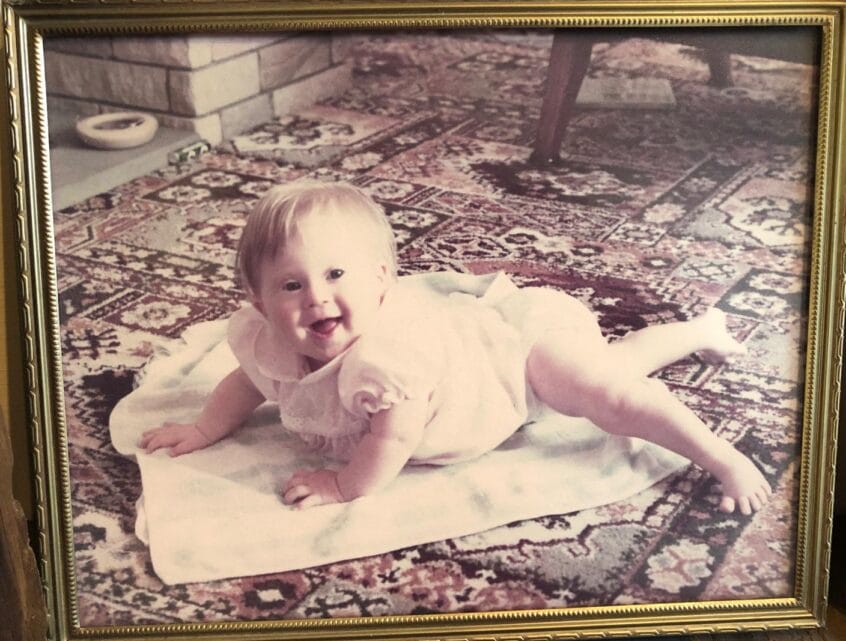
I shall always remember the very first time we visited and fell in love with Guernsey. Aft clambering over rocks we were resting and admiring the view from the alluring coast path, Jen gurgling happily in a kangaroo carrier as Malcolm and I chatted quietly smitten by the beauty of our surroundings and the profundity of the moment as we regrouped and considered the future after a tumultuous few months. The holiday was unexpected and gifted by a perceptive boss allowing us space to breathe and regroup. In that moment we made the decision to have another child. Malcolm was cutting his teeth in international business which had proven overly exciting as he journeyed in and out of Iraq by plane with fighter jet escort on the wings, staying low to avoid being detected by radar, on occasion substituting planes for a bus across the desert, witnessing bombs falling on the Shah’s palace just one mile away with window left ajar to mitigate the impact of explosions. More excitement than I chose as a new mum with a babe in arms.
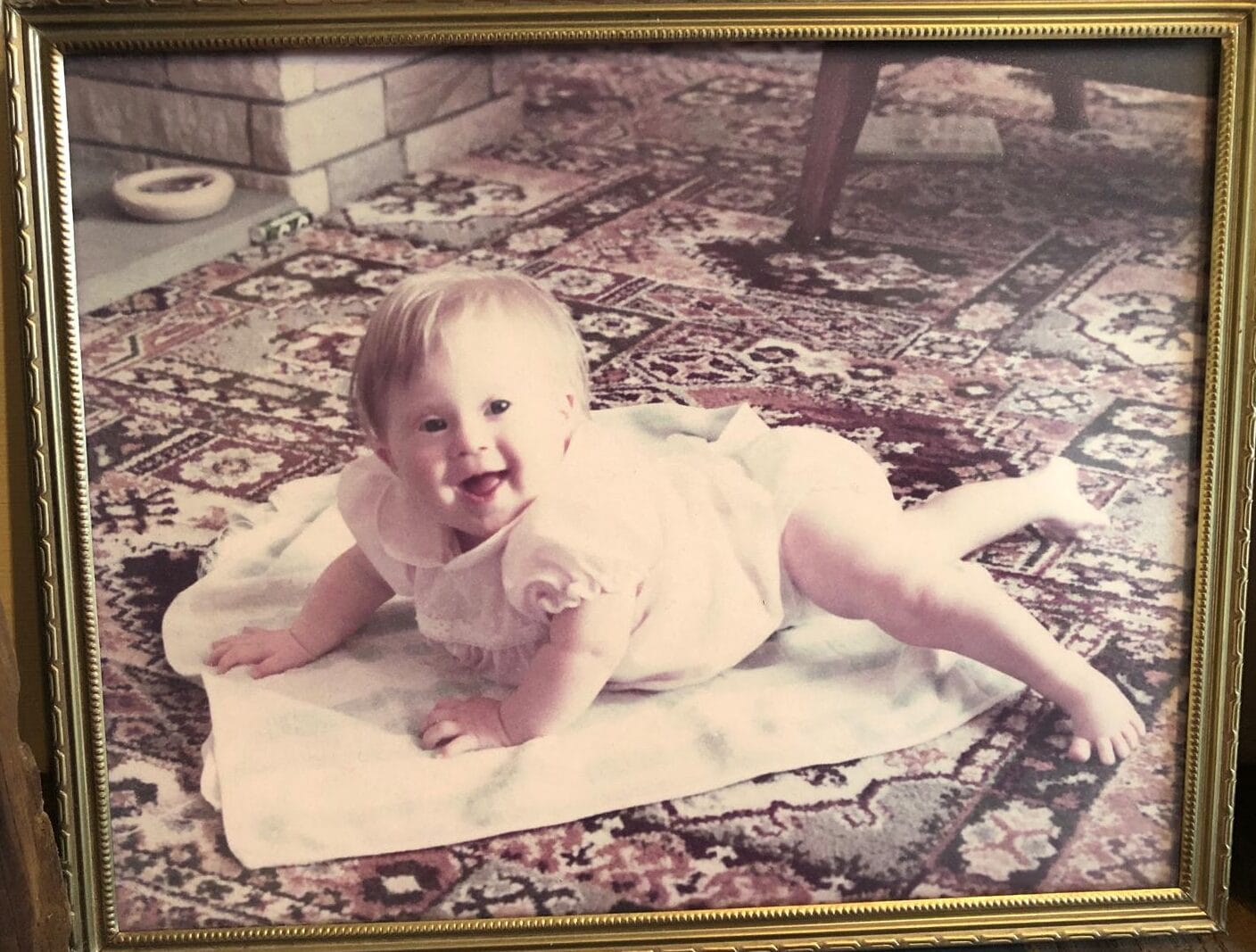 Just 6 months earlier our lives had been turned upside down following my textbook pregnancy with Jen’s birth. Jen had been diagnosed as having Down’s syndrome, trisomy 21, an extra chromosome in every cell of her body. With no knowledge, no experience, no family or friends from whom to learn, we were on a steep learning curve. We knew only one thing. We wanted to do everything in our power to give Jen the best possible life we could. Our cultural norm came into play, all guns blazing. ‘We are where we are. Where do we go from here?’ We researched.
Books proved to be tomes of depressing out of date wisdom, but books led to bibliographies and abstracts which led to more recent abstracts increasing our knowledge and expertise. We found supportive families who opened up their hearts, their contacts and networks to us. We investigated physical and nutritional lines of enquiry. Jen and I flew to the US for 24 hours to meet and learn from a doctor in Detroit practicing nutritional interventions with encouraging results. We visited the British Institute for Brain Injured Children (BIBIC) in Somerset.
6 months experience at the mercy of the system had taught Malcolm and me that it prevented us from being authentic to ourselves. Instead we committed to each other and to Jen to follow a path of our choosing involving physical stimulation to achieve neurological organization under the guidance of BIBIC alongside nutritional intervention with Dr Turkel, and to embrace every social opportunity possible.
We chose to exclude ourselves from the system, to include and align ourselves with others practicing alternative innovative therapeutic interventions, and our local community who heard our cry for help. Interestingly, after initial resistance from the medical profession we were met with virtually no further challenges.
The parallel universe of ‘Special’
Those 6 months taught us so much. They showed us that people with Down’s syndrome were expected and anticipated to present in ways we found socially unacceptable just because they had a learning disability. Was that necessarily the case? That people with Down’s syndrome had minimal speech and invariably were very difficult to understand. Why? That adults with Down’s syndrome were often lackluster, frequently overweight, had limited focus or purpose in life. Why? We repeatedly saw the propensity of others to ‘treat’ people with pop and crisps and junk food. People were regularly grouped together and shepherded around town, or sitting idling their days away in day centres, isolated or kept apart from the rest of society no matter their age. Closeted in the ‘special’ system. Why? Is this an appropriate way to treat any person? It seemed you are signed to special groups not because they were necessarily best for your child or adult, but rather because they happened to have a space to fill.
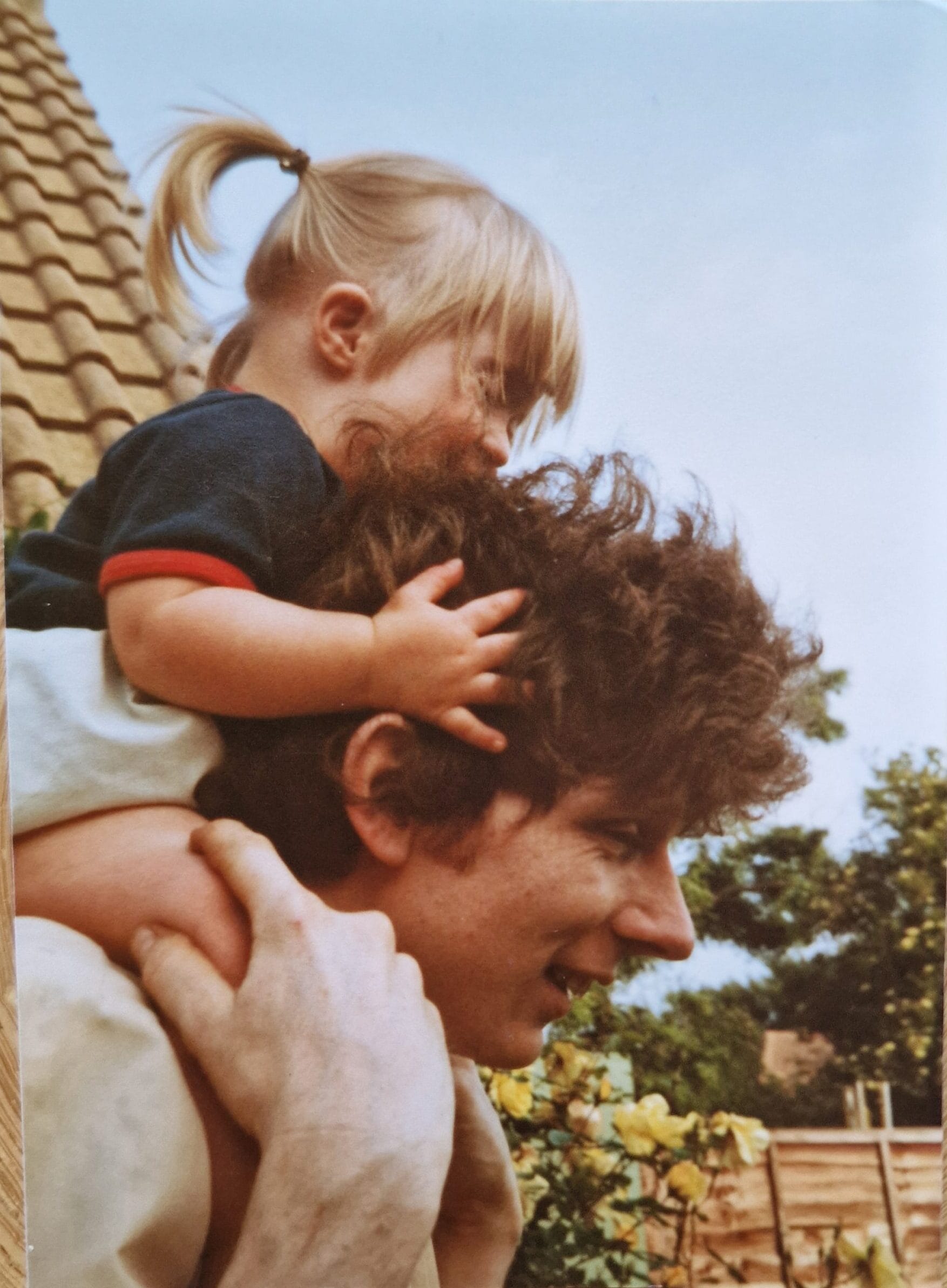
Jen on Malcolm’s shoulders
This presented a sad spectre of life to come for our daughter, a future that we chose to avoid if it was within our ability to influence otherwise. With our firm belief in the huge benefits of an active lifestyle and a healthy diet we wondered if some or all the above was inevitable or created by society.
Instead of the normal experience of parenting we chose structure through patterning, 365 days a year, and socialising aided and abetted by the 60 people who made it possible, many with toddlers who joined in the fun each week– swimming, playing at the park and the local parent and toddlers groups, followed naturally by mainstream nursery.
Jen loved it and thrived in this inclusive environment. When she was 18 months old we moved house and at 21 months old Anthony was born completing our family. For several months a friend in the close collected him in his pram as she passed the door taking her own children to school returning him in deep slumber, but it wasn’t long before he too was happily joining in the patterning exercises, crawling and singing nursery rhymers with the rest of us.
We all have choices and can choose the path that is right for us and our family. Our experiences have shown it’s possible for people with Down’s syndrome and learning disabilities to live very differently from societal expectations, which seem to still exist 44 years on from Jen’s birth.
We invite you to choose inclusion as a foundation for everyone, believing in the art of the possible and opportunities no matter the diagnosis or expectations of others.
Leave a comment or get in touch.
___________
The Blackwells believe Every person deserves the opportunity to be themselves, to follow their own dreams, no matter what ability or disability society perceives they have, or whatever label we’ve been assigned.
Inspirational Speakers leading the change
One Comment on “Choosing your path”
Sue, your story is a masterclass in reclaiming agency when the world tries to hand you a script you never asked for. There’s something remarkably bold about how you navigated Malcolm’s desert crossings and Jen’s diagnosis by simply refusing to be “shepherded” by a system that settles for the status quo. It’s clear that choosing your path wasn’t just about seeking alternatives; it was an act of raw humanity, insisting that Jen’s life be defined by her potential rather than a collection of outdated medical abstracts.