

We urge you to remember that staggering statistic: 1.5million people in the UK have a learning disability.
We are so glad our story resonated with you. Every person is born equal. Society then sees fit to decide whether we continue as equals.
We believe that every person deserves equal opportunities in life but recognise that we all have different support needs.
These are the answers to all the questions asked at ClubHubUK conference in May 2025, with some merged where it made sense to answer them together. We have put them in sections around Activity Providers, Business Development and our Personal Story which we hope helps find what you need more quickly.
If you have any further questions, please do get in touch with Sue and Malcolm or with DanceSyndrome.
DanceSyndrome changes and challenges perceptions.
Activity Provider Questions
Can we help open more DanceSyndrome classes across the UK?
We’d love to see DanceSyndrome in every town of the UK. DanceSyndrome has a blueprint for social replication. This unique way of working is pioneering and puts inclusion at the heart of everything. It is transformational, not only for the individuals involved but has a proven ripple effect. The impact and rewards for all involved, and for wider society are unquantifiably immense.
It starts with our Community Everybody Dance sessions in person in communities across Lancashire, and on Zoom on Mondays and Fridays 6pm - 7pm where you can join from the comfort of your own home. These sessions are co-delivered by a non-disabled Dance Artist and a trained Dance Leader with a learning disability, and they run weekly for 48 weeks of the year.
The next step is our Dance by Example training, an accredited leadership programme for anyone with or without a disability, and with and without dance experience. This training enables individuals with learning disabilities to develop and progress as leaders and once qualified can co-deliver an Everybody Dance session.
For anyone, or organisation who is looking to run inclusive dance sessions using the DanceSyndrome 'Everybody Dance' methodology, and with the DanceSyndrome Kitemark, stamp of approval, we can also offer support and training for Activity Workers to become Dance Artists, and subsequent further training for both Dance Artists and Dance Leaders on the DanceSydrome co-delivery model, and 'Everybody Dance' methodology. Once up and running, on-going support, guidance and top up training is offered as part of the package.
Get in touch for more details or to see what may be the best way forward for you and your business or local community: sue@blackwells.biz or info@dancesyndrome.co.uk
You can join our broader dance session online week days at 6pm - all abilities for anyone aged 14 and above:
https://dancesyndrome.co.uk/book-a-session/
I have an inclusive system and adapt my activities for different needs. Do these adaptations always make people feel included, or does it sometimes make you feel singled out?
Who hasn’t felt isolated at some time in their lives? But to be invisible in full sight is demeaning. Where is the purpose in life? DanceSyndrome is built on a bedrock of inclusion and an ethos of equality of opportunity for those with and without disabilities, from the foundation of knowing that everybody matters. Inclusion matters to everyone. Getting it right can be tricky but if it works for the person who is disabled, chances are it will be better for everyone.
Our Inclusion in Action half-day workshop is for anyone wanting to think and act more inclusively in everything they do. This workshop has significantly impacted individuals, teams and senior leaders across a wide range of sectors including Education, Health and Business.
Our Breaking Down Barriers one day training programme is perfect for Arts professionals looking to become more aware and skilled in their own business and practices. Whilst the focus us dance, the methodology and practices can be used in delivering inclusive sessions across different Art forms.
Does Dance Syndrome come and support other businesses supporting young people with Down Syndrome? Are you available to run sessions for our SEN clubs?
YES! Get in touch
What’s the one step we as children’s activities providers can do today that would allow us to be more inclusive?
It all starts with the individual and asking each person who accesses activities/sessions what they need.
What's the biggest thing Children's Activity Providers can do to make our sessions accessible?
Be open and welcoming to all. Open the door wide, remove all barriers. Work in an accessible environment. In our experience every person in the space will benefit, become more compassionate, kinder, more generous, more considerate. And happier.
Always make the effort to see the person, not the perceived disability. You might enjoy this 16 minute podcast recorded a few months ago where Jen and Sue are interviewed discussing these very questions Dr (h.c.) Jen Blackwell BEM and Sue Blackwell, United Kingdom
What do you think is the No. 1 challenge facing children’s activity providers today? And what would you do to overcome it?
We would say time and resources whilst maintaining delivering a high quality and safe service for everyone.
To help overcome these challenges, be open, clear and realistic about what you want and can achieve, start small and grow - don't try and do everything at once, review budgets and consider different sources of income, invest in training to be at the top of your game, and ensure you are up to date with compliance and safeguarding legislations.



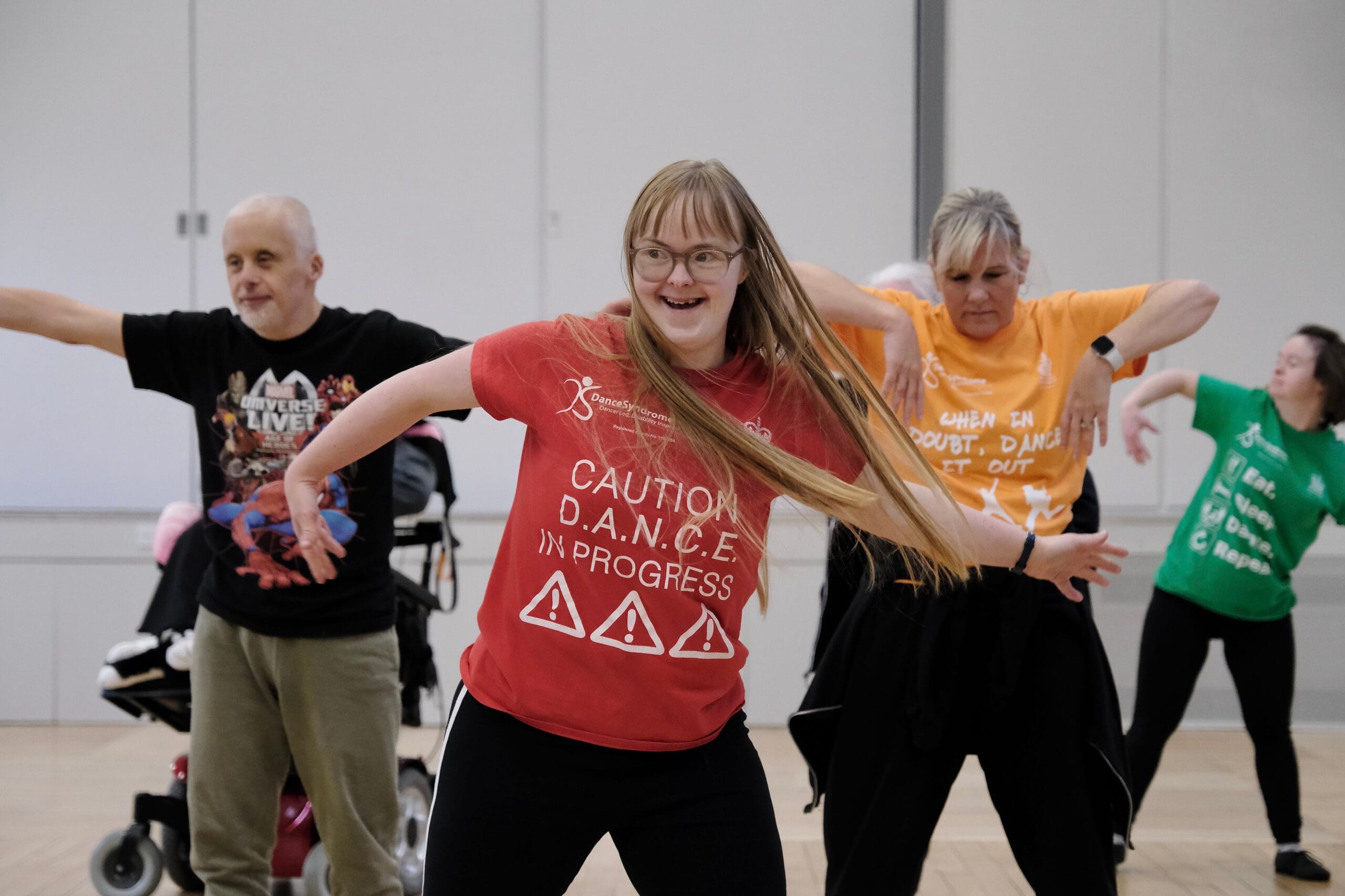


What can we do to support DanceSyndrome?
Every person can help in numerous ways. We can all highlight that you must never presume or assume what a person can do or will achieve in life. Everyone can offer help, expertise, or exposure.
Awareness raising by sharing this story with others, especially those in positions of influence in education, regular weekly and holiday activities, parents, people with learning disabilities themselves.
Book DanceSyndrome or The Blackwells for your events, training, conferences or to influence and engage with boards of trustees, govenors of schools, staff, employee support groups, learning and development groups.
Organise Awareness training by DanceSyndrome for any business, group or charity that has been proven to make people think differently about what's possible. We're currently delivering this to 180 inpatient ard managers working across learning disability, mental health and autism across the UK and the feedback has been phenomenal.
Financial - Fundraising, regular giving of any amount, promote CSR in your workplace, legacy giving, tax efficient giving, or other!
Time – trustee roles, personal expertise on a pro bono basis, other!
Sponsorship – underwrite costs of venues, social replication, presence and involvement in public conferences/events we could not otherwise afford to attend.
Help normalise people with learning disability to be seen contributing to society
Business Development Questions
What’s your favourite part of being a business owner?
The journey to new and unexpected places. Opportunities never before countenanced. Finding new unexpected bonuses. Witnessing the joy of people being fulfilled, lives being transformed, leadership from unexpected places.
What has been the biggest hurdle you have faced in your business and what did you do to get through it?
How to grow the business whilst staying true to it’s purpose. Be clear what you are trying to do and why. Do not let yourself be ‘blown off course’ by others.
What is the best business advice you have been given/ learnt that you can share with us
Any good finance person can find you profit but they cannot change the cash position so focus on cash to ensure you are solvent and sustainable.
Does Dance Syndrome come and support other businesses supporting young people with Down Syndrome? Are you available to run sessions for our SEN clubs?
YES! Get in touch
Personal Story Questions
What inspired you the most to want to succeed?
Jen says ‘I have the right to a life of my choosing. My future lies in dance. I want to travel the world and share my passion for dance’. She has never deviated from this. She threw this challenge to us when she was 21. We had no choice!
The honorary doctorate is so amazing, congratulations. How did that come about?
The honorary doctorate was a total surprise to all of us! As was the British Empire Medal the previous year. Jen has been totally focused on what she wants to do with her life ever since she left school. Her aim has never changed, the challenge has been how. Working alongside her advocate of over 20 years she has delivered to social care and midwifery students at Salford University for over 10 years helping them understand the enormous impact being listened to and supported to follow her dreams has made to her quality of life. The doctorate was recognition for her contribution.
What would you like to say to that careers advisor now?
Any professional working with people with learning disabilities needs to listen intelligently and respectfully to those they purportedly are trying to support.
When someone requires a 121 and school can’t or won’t provide them how should we tackle this? Asking as a business and a Mum 😁
As a business – every person is an individual. Be prepared to work innovatively with the person and their parents/carers to find the right answers together. Listen to them in their language of choice.
As a mum – never give up. Never take no for an answer. Be creative. Find a way to support, appropriately. You’ll have a very good idea what ‘the best support’ looks like for your child.
It is hard trying a group that does dancing
Finding the right place can be a challenge. You may need to find someone who can help to make it happen. As Jen says though, "With the right support at the right time we can go further and further". Keep looking and if it's not close by why not use DanceSyndrome training to set up your own group? You don't need to be a dancer to encourage people to move in the way that is available to them. Just ask and we'll help.
What’s the first step we can do to cross the road?
Make a conscious decision and space in your life to find ways to support and find the synergies.
If you already know of a person or family and want to do more, consider connecting more deeply and practically. Afford help for challenges they face.
If you don’t know of that person you can reach out to find them – via an offer to schools, through your workplace, community groups, CSV, networking through friends - find a way to share that you care enough and want to support an individual.
Does Jen have a favourite performer that inspires her ?
Alexander Burke is Jen's idol. Jen met her in person facilitated by The National Lottery, and used in their advertising. Project DanceSyndrome | Winners and Good Causes | The National Lottery Jen’s party number is danced to Alexander singing Hallelujah.
Jen and Lucy - what’s your favourite style of dance?
Jen - Ballet
Lucy - Ballet
Ask questions & keep in touch. We'd love to hear how our story helps you with yours: sue@blackwells.biz or info@dancesyndrome.co.uk